A roof can look “mostly fine” from the driveway and still be close to the end of its service life. That is usually when homeowners start asking, what is re roofing, and is it the same thing as replacing a roof? The short answer is that re-roofing means putting a new roofing system on a home or building when the existing roof has worn out, failed, or no longer offers reliable protection.
That simple definition helps, but the real answer depends on the condition of the current roof, the type of material already installed, local code requirements, and whether the existing roof can support another layer or needs to be torn off completely. In Southern Oregon, where roofs take a beating from hot summers, heavy rain, wind, debris, and seasonal temperature swings, those details matter.
What is re roofing?
Re-roofing is the process of restoring a roof’s ability to protect a structure by installing new roofing materials over an existing roof or after removing the old roof down to the decking. In everyday conversation, many people use re-roofing and roof replacement to mean the same thing. Contractors often use the term more broadly to describe the overall act of replacing an aging roof system.
That is where confusion starts. Some people think re-roofing always means adding a second layer of shingles over the first. Sometimes that is true. In other cases, re-roofing involves a complete tear-off and brand-new installation because the old roof has too much damage, too many existing layers, or underlying problems that need to be fixed first.
So if you are asking what is re roofing, the practical answer is this: it is not a cosmetic patch job. It is a larger roofing project meant to give the home or building dependable weather protection again.
Re-roofing vs. roof repair
A repair fixes a specific issue. That could be replacing a few missing shingles, resealing flashing around a chimney, fixing a leak near a vent, or addressing a small section damaged by wind or a fallen branch.
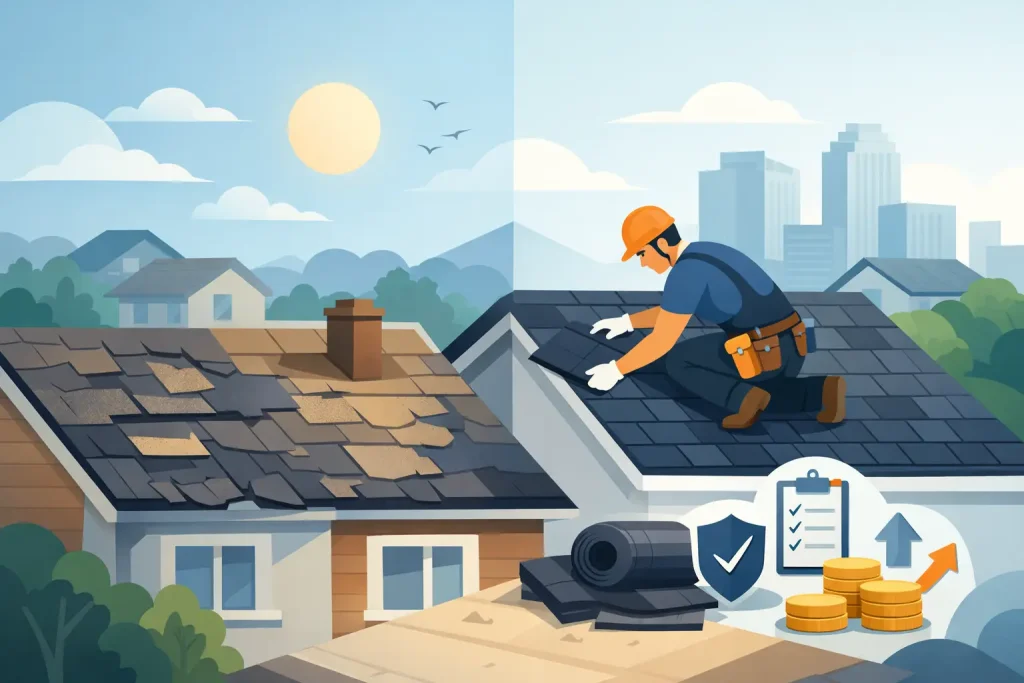
Re-roofing is different because the problem is no longer isolated. When a roof is broadly worn, brittle, curling, granule-loss heavy, leaking in more than one area, or simply at the end of its expected lifespan, repairs can start turning into repeated temporary fixes. At that point, spending more money on patchwork often stops making sense.
For property owners, that distinction matters because the cheapest job up front is not always the lowest cost over time. A repair may buy you a few more years. A re-roofing project is meant to reset the clock.
When re-roofing makes sense
The best candidates for re-roofing are roofs that have reached the point where performance is declining across the whole system, not just one trouble spot. Age is a big factor, but age alone is not enough. Installation quality, ventilation, storm exposure, maintenance history, and the roofing material all affect how long a roof lasts.
On composition shingle roofs, common signs include widespread curling, cracked tabs, bald spots where granules have worn away, repeated leaks, and soft areas that suggest moisture intrusion below the surface. On metal roofing, you may see fastener issues, corrosion, failed seams, or flashing breakdown. On low-slope and flat systems, ponding water, membrane damage, seam separation, and recurring leaks are red flags.
Re-roofing can also make sense when you are planning ahead. Some homeowners choose replacement before a roof fully fails because they want to avoid interior water damage, mold issues, insulation problems, and emergency costs. That is often the smarter move, especially if a roof is clearly near the end of its service life.
When a roof needs a full tear-off instead
This is the part many property owners do not hear until an inspection. Not every roof can or should be re-covered over the top.
If the decking is rotted, the underlayment has failed, moisture is trapped in the system, or the roof already has multiple layers, a full tear-off is usually the right path. The same goes for roofs with structural concerns, poor prior workmanship, or flashing details that were never installed correctly in the first place.
A tear-off costs more than laying new material over an old layer, but it gives the contractor a chance to inspect the deck, replace damaged wood, improve ventilation, and build the roof back correctly from the foundation up. That matters because a new outer layer cannot fix hidden problems underneath.
For homeowners who want the roofing job done right, this is where workmanship matters most. Cutting corners under the shingles is still cutting corners.
What happens during a re-roofing project?
The process depends on the roof type and whether the existing materials stay in place, but most projects follow the same basic path. First comes the inspection. A contractor checks the roof covering, flashing, penetrations, decking condition, drainage, ventilation, and signs of water damage.
Next comes the recommendation. If the roof qualifies for an overlay and local code allows it, that may be discussed as an option. If not, the contractor will recommend a tear-off and full replacement. Either way, the goal is to match the solution to the actual condition of the roof, not force a cheaper option that will fail early.
Once work begins, the crew protects the property, removes materials if needed, repairs damaged substrate, installs underlayment and flashing, and then installs the finished roofing system. Gutters, skylights, ventilation components, and edge details may also be updated depending on the project scope.
A properly managed re-roofing project should leave you with more than a better-looking roof. You should end up with a complete system built to handle weather, drain correctly, and hold up over time.
What is re roofing for different roof types?
The answer changes a little depending on the material. For composition roofs, re-roofing often means removing worn shingles and installing a new shingle system with updated underlayment, flashings, and ventilation components. For metal roofs, it may involve replacing panels, addressing corrosion, improving fastener systems, or rebuilding key details around transitions and penetrations.
On flat or low-slope commercial roofs, re-roofing can mean replacing a membrane system such as TPO or other single-ply materials, correcting drainage issues, and restoring waterproofing performance across the entire building envelope. These projects require a different skill set than a steep-slope residential roof, which is one reason contractor experience matters so much.
The broad idea stays the same. Re-roofing means restoring dependable protection with a system that fits the structure, not just covering symptoms.
How to tell if you should repair or re-roof
The honest answer is that it depends on the roof’s age, the extent of damage, and how often problems keep coming back. If a newer roof has one isolated issue, repair is often the sensible choice. If an older roof is leaking in several places or showing widespread wear, re-roofing is usually the better investment.
This is also where an experienced local contractor brings real value. Southern Oregon roofs deal with conditions that can speed up wear in ways out-of-area companies may overlook, including summer heat, wildfire debris, winter storms, moss growth in shaded areas, and drainage problems caused by clogged valleys and gutters.
A good inspection should not feel like a sales pitch. It should tell you what is failing, what still has life left, what your options are, and what trade-offs come with each one.
Cost, value, and the mistake of choosing by price alone
Re-roofing is a major project, so price matters. But the lowest bid can get expensive fast if it skips tear-off where one is needed, uses lower-grade materials, or rushes labor. Roofs fail early for predictable reasons, and poor installation is high on that list.
The better way to think about value is to look at the whole package: materials, installation standards, warranty strength, ventilation, flashing quality, cleanup, and whether the contractor is licensed, bonded, and accountable after the job is done. A roof is not a surface product. It is a protection system for everything underneath it.
That is why many homeowners and property managers look for a contractor with proven workmanship, clear communication, and warranties that actually mean something. In a place like the Rogue Valley, where weather and seasonal wear are part of life, durability is not a luxury.
If you have been wondering what is re roofing, the best next step is not guessing from the ground. It is getting a clear inspection from a local professional who will tell you whether your roof needs a repair, an overlay, or a full replacement. A solid roof does not just keep water out. It lets you stop worrying every time the next storm rolls in.