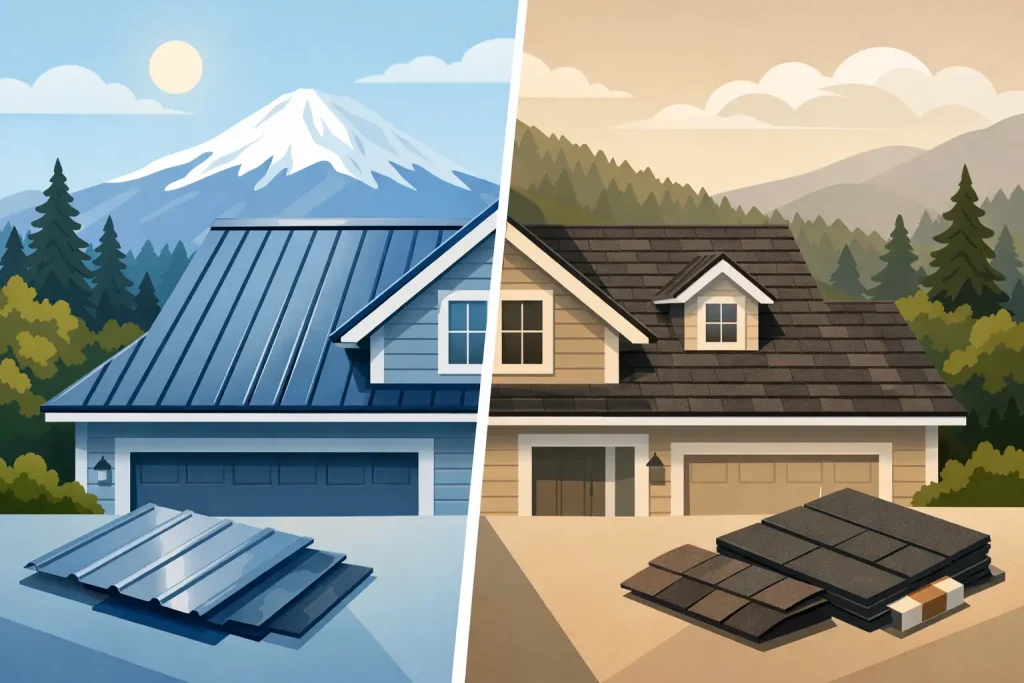
A roof replacement is not a small purchase, especially when your home has already dealt with summer heat, wind-driven rain, pine needles, and the occasional winter freeze. When homeowners compare metal roof vs asphalt shingles, the best choice is rarely about which material is universally better. It is about which system fits the home, budget, long-term plans, and conditions around it.
For Southern Oregon property owners, both materials can be dependable when they are properly installed. The difference comes down to upfront cost, expected service life, maintenance needs, appearance, and how well the roof assembly is designed for the building. A roofing job done right starts with an honest look at those trade-offs.
Metal Roof vs Asphalt Shingles: The Core Difference
Asphalt shingles are the most common residential roofing material in the United States. They use a fiberglass base coated in asphalt and mineral granules, and they are installed in overlapping rows. Architectural shingles, which are thicker and more dimensional than basic three-tab shingles, are a frequent choice for homeowners who want a durable, familiar-looking roof at a manageable price.
Metal roofing is a broader category. It may be standing-seam metal, corrugated panels, metal shingles, or other panel systems. Standing-seam roofs are especially recognizable for their clean vertical lines and concealed fasteners. Metal systems are lightweight, long-lasting, and available in a range of colors and profiles.
Neither material makes up for weak decking, poor ventilation, improper flashing, or careless installation. Valleys, pipe penetrations, skylights, wall transitions, and gutters all need careful attention. A quality roof is a complete system, not just the visible surface.
Upfront Cost and Long-Term Value
Asphalt shingles usually cost less to install than metal roofing. That lower initial investment is a major reason they remain a practical choice for many homeowners, landlords, and property managers. If a roof replacement is urgent due to leaks or storm damage, asphalt may allow a property owner to get reliable protection in place without stretching the budget too far.
Metal has a higher upfront cost because the materials, fabrication, underlayment details, trim, and installation labor are typically more involved. The price can vary widely based on roof complexity. A simple gable roof is very different from a roof with multiple valleys, dormers, skylights, steep pitches, and difficult access.
The long-term equation may favor metal for owners who expect to stay in the property for decades. A properly installed metal roof can often outlast multiple asphalt-shingle roofs. That does not automatically mean it is the right financial decision for every household. If you plan to sell soon, are working within a fixed replacement budget, or own a property where matching nearby homes matters, architectural shingles may provide the better value.
Lifespan, Repairs, and Maintenance
A well-installed architectural asphalt roof can commonly provide decades of service, though its actual lifespan depends on shingle grade, ventilation, sun exposure, weather, and maintenance. Southern Oregon summers can be hard on roofing materials, particularly on dark roofs with limited attic ventilation. Over time, shingles can lose granules, curl, crack, or become brittle.
Metal roofing generally has a longer expected service life. It resists rot, does not absorb moisture like some materials, and does not shed granules as it ages. Quality finishes also help the panels maintain their color and resist corrosion.
However, “low maintenance” does not mean “no maintenance.” Metal roofs still need periodic inspections. Fasteners, sealants, flashing, penetrations, and gutters need attention, particularly after severe weather or when debris accumulates. An impact from a falling branch can dent metal, while a damaged panel may require more specialized repair work than replacing several shingles.
Asphalt repairs are often more straightforward because individual shingles can be removed and replaced. The catch is color matching. A new shingle patch on an older roof may be visible, especially after years of fading.
Weather, Fire, and Energy Performance in Southern Oregon
Local conditions should carry real weight in a roofing decision. The Rogue Valley sees hot, dry summers, wet periods, seasonal winds, and neighborhoods with significant tree cover. Homes in the foothills or rural areas may also face greater exposure to branches, needles, and wildfire concerns.
Metal roofing sheds rain and snow efficiently when designed with the correct slope, details, and drainage plan. It is also highly resistant to wind when it is properly fastened and trimmed. Many metal roofing products carry strong fire ratings, which can be valuable in areas where wildfire risk is part of a homeowner’s planning.
That said, fire resistance is about the full roof assembly, not just the panel or shingle. A roof’s rating can depend on the underlayment, deck, installation method, vents, and surrounding conditions. Class A asphalt shingles are available as well, and they can be a solid choice for homes where fire resistance is a priority.
Metal can reflect more solar heat than traditional dark asphalt shingles, particularly when a reflective finish is selected. This may help reduce heat gain in an attic during hot weather. But attic ventilation and insulation still matter. A reflective roof cannot fix blocked soffit vents, inadequate insulation, or air leaks from the living space into the attic.
Appearance and Neighborhood Fit
Some homeowners choose asphalt because it looks right on nearly any traditional home. Architectural shingles come in many colors and can provide depth that works well with Craftsman, ranch, colonial, and other common home styles. They are also usually easier to blend with existing neighborhood roofs.
Metal has come a long way from the plain barn-roof image many people picture. Standing seam offers a clean, modern appearance, while metal shingles and textured panels can suit more traditional architecture. On farm homes, cabins, contemporary homes, and rural properties, metal can look especially at home.
The practical question is not whether metal or asphalt looks better. It is whether the color, profile, and finish fit the building. Before committing, consider the home’s siding, trim, gutters, nearby rooflines, and any homeowners association requirements.
Installation Details Matter More Than Most Owners Realize
A metal roof is not simply installed over a house and forgotten. It requires accurate measuring, proper panel layout, correct expansion allowances, carefully formed flashings, and the right treatment around every penetration. Fastener placement and trim details matter. Cutting corners can lead to leaks, rattling, oil canning, or premature failure.
Asphalt shingles also demand skilled installation. Improper nailing, weak starter courses, poorly installed ice and water protection, exposed nails, and rushed flashing work can shorten the roof’s life. A low bid can become expensive when it leaves behind hidden problems at chimneys, skylights, sidewalls, and valleys.
In some reroof situations, metal may be installed over an existing shingle roof if local code, roof condition, and system requirements allow it. That is not always the best answer. A tear-off gives the contractor a clear view of the decking and allows damaged wood, ventilation problems, and concealed moisture issues to be addressed before the new roof goes on.
Which Roof Is Right for Your Property?
Choose asphalt shingles when you want a proven, attractive roofing material with a lower initial cost and broad style options. They are often a sensible fit for homeowners replacing a worn roof, preparing a home for sale, or keeping a rental property protected within a defined budget.
Consider metal when long service life, low ongoing upkeep, energy-conscious design, and fire resistance are high priorities. It can be a strong investment for a forever home, a rural property, or a commercial or residential building where a durable, clean-lined roof makes sense.
The right answer may also be influenced by roof pitch. Low-slope areas, additions, porches, and commercial sections may need a different roofing system than the main steep-slope roof. A contractor with experience across composition, metal, flat, and single-ply systems can help avoid forcing one material into a job where it does not belong.
A site inspection should include more than a material recommendation. It should look at the condition of the deck, flashing, ventilation, drainage, gutters, skylights, roof access, and any signs of previous leaks. Rogue Valley Roofing approaches replacements with that full-system view because lasting workmanship means no cutting corners on the details people cannot see from the street.
Before choosing between metal and asphalt, ask for clear information on the proposed system, warranty coverage, tear-off needs, ventilation work, and how problem areas will be handled. The best roof is the one installed for your property’s real conditions, by a local crew willing to stand behind the work long after the final cleanup.