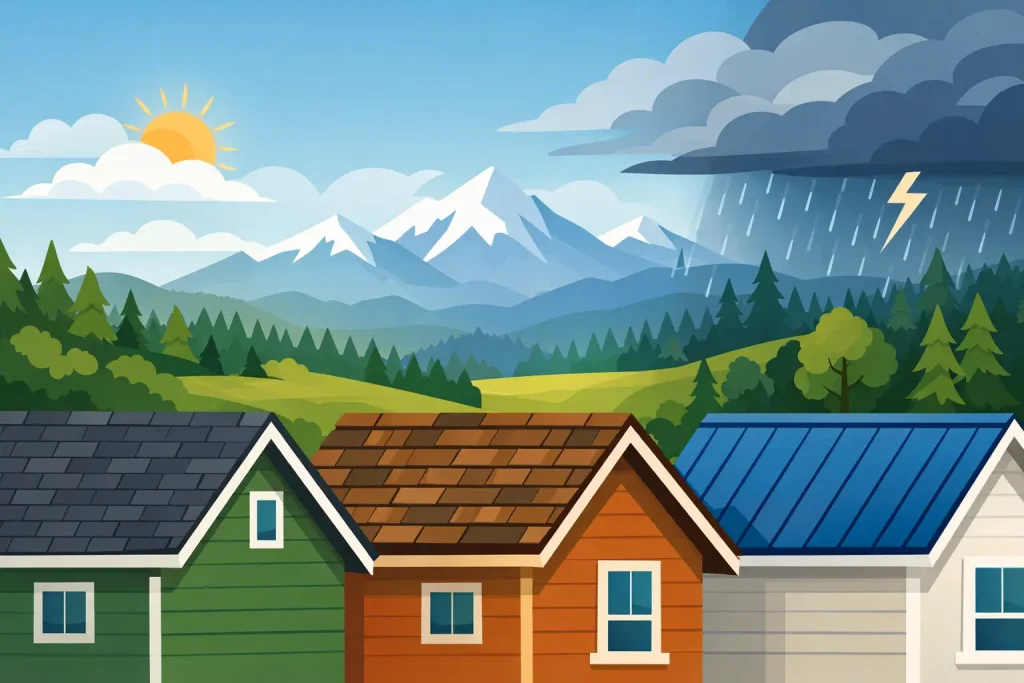
A roof in Southern Oregon has to handle more than rain. It may see wind-driven winter storms, wet debris in the valleys, hot and dry summer afternoons, freezing nights, wildfire smoke, and sudden temperature swings. The best roofing material for Oregon weather is the one that fits your home’s roof slope, budget, surrounding trees, exposure, and long-term plans – not simply the material with the biggest sales pitch.
For many Rogue Valley homeowners, a properly installed architectural composition shingle roof is the practical all-around choice. For homeowners who plan to stay put and want the longest service life, metal roofing can be an excellent investment. The difference comes down to the whole roofing system and, just as importantly, the workmanship behind it.
What Oregon Weather Demands From a Roof
Oregon is not one climate. Coastal homes deal with persistent moisture and salt air. Central Oregon sees colder, snowier conditions. Here in Medford, Ashland, Grants Pass, and nearby communities, roofs need to stand up to a mix of rainy seasons, valley fog, wind, summer heat, and dry vegetation during fire season.
That combination puts pressure on vulnerable areas: valleys where water collects, pipe flashings, chimneys, skylights, eaves, and roof-to-wall transitions. A roofing material may be rated for decades, but it will not perform as intended if underlayment, flashing, ventilation, and drainage are treated as afterthoughts.
Moss and algae are another practical concern in shaded locations. A north-facing roof beneath mature trees can stay damp long after a storm. Keeping the roof clear of branches and leaves, maintaining gutters, and addressing small repairs early can add years to almost any roofing system.
Best Roofing Material for Oregon Weather: The Top Choices
Architectural Composition Shingles: Best Value for Most Homes
Architectural composition shingles are the most common choice for Southern Oregon homes for good reason. They provide dependable weather protection, work well on many roof designs, and offer a strong balance of appearance, cost, and durability. Compared with basic three-tab shingles, architectural shingles are thicker, more dimensional, and generally better equipped to handle wind and everyday wear.
A quality composition roof is often the right answer for homeowners replacing an aging roof on a reasonable budget. It is also available in a wide range of colors, including lighter shades that can help reduce heat absorption during Rogue Valley summers.
The trade-off is lifespan. Even a high-quality shingle roof does not usually last as long as metal, especially where moss, tree debris, or poor attic ventilation are ongoing issues. Shingles also need careful installation around penetrations and transitions. A crew that cuts corners on flashing or underlayment can turn a good material into a short-lived roof.
Standing Seam Metal: Best for Long-Term Durability
Metal roofing is one of the strongest options for property owners who want long-term performance, fire resistance, and a clean appearance. Standing seam metal panels have concealed fasteners, which reduces the number of exposed points where water can eventually work its way in. The raised seams also shed rain, leaves, and light snow effectively.
For homes exposed to summer sun, metal can be a smart energy-conscious choice. Reflective finishes can reduce heat gain, and the material does not dry out or crack the way some other roofing products can over time. Metal is also lightweight compared with tile and can be an especially good fit for certain steep-slope homes, cabins, and rural properties.
The upfront cost is higher than composition shingles. Metal roofs also require experienced installation. Panel layout, trim details, fastener placement, expansion allowances, and flashing work all matter. A metal roof should not be treated like a quick upgrade or installed by a crew learning on the job.
Some homeowners ask about rain noise. With proper roof decking, underlayment, and attic insulation, a metal roof is not typically the noisy system people imagine. The bigger question is whether its higher initial cost makes sense for your expected length of ownership and maintenance priorities.
Metal Shingles and Exposed-Fastener Panels: A Middle Ground With Limits
Metal shingles can provide a more traditional residential look while delivering many advantages of metal. They may appeal to homeowners who want durability without the broad-panel appearance of standing seam roofing.
Exposed-fastener metal panels are often used on barns, shops, garages, and some homes because they are more affordable than standing seam. They can be a practical solution in the right application, but exposed screws and washers require attention over time. Thermal movement and aging gaskets can create maintenance needs that concealed-fastener systems avoid. For a primary residence, it is worth comparing the long-term details, not just the initial price.
Cedar Shake: Attractive, but Not the Low-Maintenance Choice
Cedar shake has a natural look that suits some historic, wooded, and high-end properties. But Oregon moisture and tree cover can make it a demanding material. Cedar needs regular care to limit moss, debris buildup, and moisture-related deterioration. Fire concerns also matter in many Southern Oregon areas.
A cedar roof can be beautiful when properly selected, installed, and maintained. It is not usually the best fit for a homeowner looking for minimal upkeep or the most predictable lifetime cost. If you love the look of shake, ask about composition or metal products designed to capture a similar appearance with fewer maintenance concerns.
Tile and Slate: Durable but Often Impractical
Tile and slate can last a very long time, but they are heavy and require a structure designed to carry the load. Repairs can also be more specialized and costly. These materials are not common recommendations for standard Southern Oregon roof replacements unless the home was built for them or the owner has a specific architectural goal.
Their durability is real, but durability alone does not make a material the right choice. The roof deck, framing, slope, local wind exposure, and budget must all support the decision.
Low-Slope and Commercial Roofs Need a Different Answer
A standard shingle system is not the answer for every roof. Low-slope residential sections, commercial buildings, warehouses, and industrial properties need systems designed to manage standing water and broad roof penetrations.
Single-ply membranes such as TPO and PVC are commonly used for low-slope roofs. They can provide reflective surfaces, heat-welded seams, and dependable protection when installed correctly. Modified bitumen and other built-up systems may also be appropriate depending on the building, roof traffic, drainage, and existing roof assembly.
For commercial property owners, maintenance should be part of the material decision. A roof with drains, HVAC equipment, vents, and frequent foot traffic needs regular inspections. Catching a failed seam, damaged flashing, or blocked drain early is far less expensive than dealing with soaked insulation or interior damage later.
Do Not Choose Material Without Looking at the Full System
The roof covering is visible, but the parts underneath do much of the real work. Quality underlayment provides another line of defense when wind pushes rain beneath the outer surface. Ice and water protection may be needed in vulnerable areas. Proper flashing directs water safely around chimneys, walls, skylights, and valleys.
Attic ventilation matters too. A poorly ventilated attic can trap heat and moisture, shorten shingle life, encourage condensation, and make summer rooms harder to cool. Gutters matter for the same reason: water should leave the roof edge and move away from the foundation, not overflow onto fascia boards or landscaping.
This is why the lowest roofing bid is rarely the best value. Two proposals may list the same shingle color while including very different underlayment, flashing, ventilation, tear-off, deck repair, and warranty coverage. Ask what is included, what happens if damaged decking is found, and who is responsible for protecting your property during the work.
How to Make the Right Choice for Your Property
Start with an honest assessment of your roof. Its age, slope, existing leaks, ventilation, tree cover, and condition of the decking all affect the recommendation. A roof that needs frequent repairs, has widespread granule loss, curling shingles, soft decking, or recurring leaks may be ready for replacement rather than another temporary patch.
Next, consider how long you expect to own the property. A composition roof may be the sensible choice when budget and reliable performance are the priority. A standing seam metal roof can make more sense when you are planning for decades of ownership, value fire-conscious materials, or want less concern about ordinary weathering.
Finally, choose an installer with local experience and clear standards. Rogue Valley Roofing believes a roofing job done right means no cutting corners on materials, labor, flashing, cleanup, or the details that keep water out. A licensed local contractor should be willing to explain the options plainly, inspect the whole roof system, and provide a proposal you can understand.
The right roof should let you watch a winter storm roll through the Rogue Valley without wondering what is happening above your ceiling.