
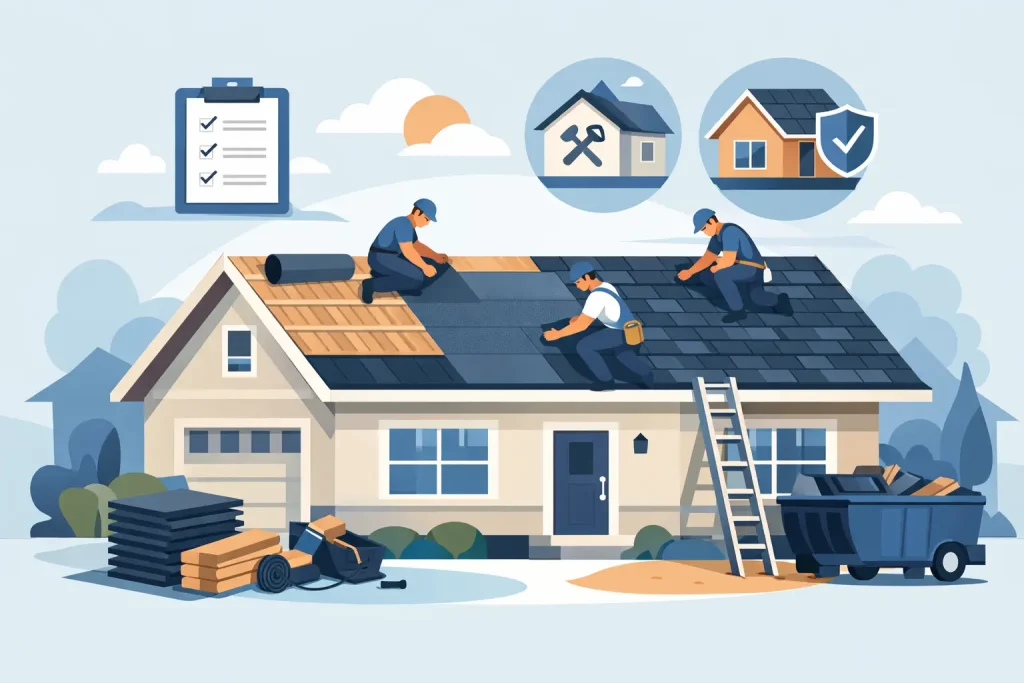
A new roof is one of the biggest projects you can do on a home or commercial building, and most people only go through it once or twice. That is why the new roof installation process matters. When you know what happens before, during, and after the work, it is easier to spot quality, ask better questions, and avoid the kind of shortcuts that cause leaks years too soon.
In Southern Oregon, that matters even more. Roofs here have to handle hot summers, wet stretches, wind, debris, and the steady wear that comes with changing seasons. A roof that looks fine from the driveway can still have failing flashing, soft decking, or ventilation problems hiding underneath. Good installation is not just about putting on new shingles or panels. It is about building a complete system that protects the structure below.
What the new roof installation process should start with
A proper roofing job starts before any materials arrive. The first step is an inspection and site evaluation. A contractor should look at the roof surface, roof pitch, existing layers, attic ventilation, flashing details, drainage, penetrations, and any signs of underlying water damage. On a commercial building, that also includes membrane condition, insulation performance, and drainage patterns across the roof field.
This stage is where honest recommendations matter. Some roofs need a full tear-off. Others may qualify for a re-roof depending on local code, existing roof condition, and the type of system already in place. There is no one-size-fits-all answer. If someone gives a price without closely inspecting the structure, that is a red flag.
A detailed estimate should also spell out what is included. That means material type, underlayment, flashing replacement, ventilation work, cleanup, disposal, timeline, and warranty terms. Clear scope now prevents confusion later.
Material selection is part of the installation process
The new roof installation process is not only about labor. Choosing the right roofing system has a direct effect on lifespan, energy efficiency, maintenance needs, and overall cost. Composition shingles remain a common choice for many homes because they are cost-effective and available in a wide range of styles. Metal roofing offers excellent longevity and sheds water well, but the upfront investment is higher. Flat and low-slope commercial roofs often call for single-ply systems or other assemblies designed for drainage and UV exposure.
The best material depends on the building, not just the budget. A steep residential roof in Ashland may call for one approach, while a low-slope commercial property in Medford may need another. Appearance matters, but performance matters more. If the wrong system is installed for the roof design, the problems show up fast.
That is also why certified installation matters. Even strong materials can fail early if they are installed outside manufacturer specs. Nails in the wrong place, poor seam work, weak flashing details, or rushed prep work can void the value of a premium product.
Protecting the property before work begins
Before tear-off starts, the crew should prepare the site. That usually includes protecting landscaping, placing tarps where needed, staging materials in a safe area, and planning debris removal. For residential projects, this step helps protect siding, windows, patios, and yard areas. For commercial work, it may also involve coordinating access, minimizing disruption, and keeping work zones safe for staff, tenants, or customers.
This part may seem minor compared to the roof itself, but it says a lot about the contractor. Respect for the property usually goes hand in hand with respect for workmanship.
Tear-off and deck inspection
On most full replacements, the old roof needs to come off first. Tear-off exposes the roof deck so the crew can see what condition the structure is really in. This is one of the most important stages because hidden damage often does not show up until the old materials are removed.
Once the roof is stripped down, the decking is inspected for rot, soft spots, water damage, delamination, or structural issues. Any compromised sections should be replaced before new materials go on. Installing over damaged decking is one of the clearest examples of cutting corners, and it creates problems that new shingles or metal panels cannot solve.
This is also the point where some change orders may happen. If unseen damage is found, repairs may need to be added. That can be frustrating, but it is usually better than burying the issue under a brand-new roof and paying for bigger repairs later.
Underlayment, flashing, and ventilation
Once the deck is sound, the roof system starts going back together. First comes underlayment, which acts as a secondary moisture barrier under the visible roofing material. In areas prone to leaks or at vulnerable transitions, specialized waterproofing products may also be used.
Then come the details that separate average work from reliable work. Flashing around chimneys, walls, skylights, valleys, vents, and pipe penetrations must be installed correctly. These are common leak points, and they deserve close attention. Reusing old flashing to save time or money often leads to trouble.
Ventilation is another piece that gets overlooked by property owners and sometimes by contractors. A new roof should not trap heat and moisture in the attic or building assembly. Proper intake and exhaust ventilation helps protect decking, reduce moisture buildup, improve energy performance, and support the life of the roofing system. The exact setup depends on the building, so this is another area where experience matters.
Installing the roofing material
After prep work is complete, the visible roof covering is installed. For composition roofing, that includes starter materials, shingle layout, fastening patterns, ridge components, and accessory pieces. For metal roofing, it may include panels, clips, trim, closures, and sealant details. On flat or low-slope systems, it could involve membranes, fasteners, adhesives, seams, insulation layers, and edge metal.
This is the stage most people picture, but it is not the whole job. The quality of the finished roof depends heavily on everything underneath it. A roof can look straight and clean from the ground and still be poorly built if the prep and detail work were rushed.
Weather also affects timing here. Roofing crews have to work around rain, high winds, and extreme heat. A good contractor plans carefully, protects exposed areas, and avoids rushing installation just to hit a deadline. Fast is not the same as done right.
Cleanup, final inspection, and warranty
A roofing project is not finished when the last shingle or panel is installed. Cleanup should include removing debris, sweeping for nails with magnetic tools, hauling off old materials, and checking the grounds carefully. Homeowners notice this right away, and they should. Leaving a property littered with scraps and fasteners is unacceptable.
The final inspection matters just as much. The contractor should review the completed work, confirm that key details were installed properly, and address any punch-list items. If permits or local inspections are required, those should be completed as well.
This is also when warranty information should be explained clearly. There is a difference between manufacturer coverage and workmanship coverage, and property owners should understand both. Strong warranties mean more when they are backed by a local contractor with a reputation to protect. That is one reason many Southern Oregon property owners choose a company like Rogue Valley Roofing. Licensed local service, certified installation, and no cutting corners are not marketing extras. They are what make a roof worth the investment.
What can change the timeline or cost
No two roofing jobs are exactly alike. A simple single-family home with easy access may move quickly. A steep-slope roof, bad decking, complex flashing, skylights, chimney work, or active weather can slow things down. Commercial projects often involve larger crews, safety planning, specialized materials, and coordination with business operations.
Cost follows the same pattern. Size matters, but so do pitch, material choice, tear-off complexity, disposal, structural repairs, ventilation upgrades, and code-related improvements. The cheapest bid may leave out critical parts of the job, especially flashing replacement, underlayment quality, or deck repairs. That is why comparing estimates line by line is smarter than comparing only the bottom number.
How to know the job is being done right
You do not need to be a roofer to judge whether a project is being handled professionally. Look for clear communication, a written scope, proper licensing and insurance, organized jobsite practices, and a crew that treats your property with care. Ask whether flashing is being replaced, how ventilation will be addressed, what happens if bad decking is found, and what kind of warranty comes with the work.
The best roofing contractors do not avoid those questions. They answer them directly.
A new roof should bring peace of mind, not guesswork. If you understand the process and hire a contractor who values craftsmanship over shortcuts, you are far more likely to get a roofing job done right the first time.